The one city here that does not orbit Oklahoma City
Every other city on this site gets described by where it sits in relation to Oklahoma City. West of it, between it and somewhere else, founded to stay apart from it, surrounded by it. Norman is the exception. It has its own gravity, and the reason goes back to a single decision made when the town was about a year old.
On December 19, 1890, the Territorial Legislature placed the University of Oklahoma in Norman. The first classes met in 1892 in rented rooms downtown, because there was nothing else yet to hold them. From that point on the town and the university grew as one organism, and you can still feel it. The game-day traffic and the rent signs near campus both trace back to that vote, and so does the size of the city that grew up around them.
Norman built its own payroll and its own hospital, and eventually it took on the federal government's severe-weather enterprise as well. Oklahoma City is 23 minutes up Interstate 35. Some people here make that drive every morning. A lot of Norman never needs to.
Where the national forecast gets written
The National Weather Center is in Norman. Inside it sit NOAA's Storm Prediction Center and the National Severe Storms Laboratory, and the severe-weather watches for the entire country are issued from that building. A watch that crawls across the bottom of a television screen in Ohio started as a forecaster's call in Norman.
NOAA has been in Norman since the 1970s, so none of this is new to the city. The forecasters have been somebody's neighbors here for a long time. That puts a particular kind of work in town. People who study the atmosphere for a living share the city with the students training to do it, and that is a big part of why Norman does not behave like a suburb of anything.
Moore, just up the interstate, is the page on this site about how a city answered the weather and what it now requires of every new house. Norman is where people spend their careers on the forecast. The two belong side by side and they cover different ground.
Nearly half of Norman rents
At the 2020 census, 51.4 percent of Norman's occupied housing was owner-occupied and 48.6 percent was renter-occupied. No other city I cover comes anywhere close to that split.
A town built around a university of around thirty thousand students was always going to end up here, and it changes what buying a house in Norman actually involves. Near campus, a buyer is competing with investors as well as other families, and a house gets priced against what it would rent for as much as against what sold down the street. Move away from the university and that pressure changes, and it does not change evenly. It shifts block by block.
Almost nothing written about Norman says this, so I will. When I look at a house here for someone who plans to live in it, one of the first things I check is who else that house appeals to. An investor's math and a family's math do not land on the same number, and near campus they can both end up wanting the same house.
Which Norman you are buying
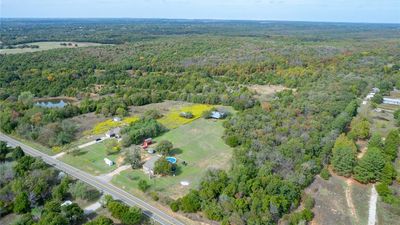
Norman covers 189 square miles, and on this site only Oklahoma City is bigger. The annexations of the 1960s carried the city limits east past Lake Thunderbird, and out there Norman stops looking like a city at all. Eastern Norman is Cross Timbers forest and acreage, houses set back on land, inside the same city limits as the shops on Campus Corner.
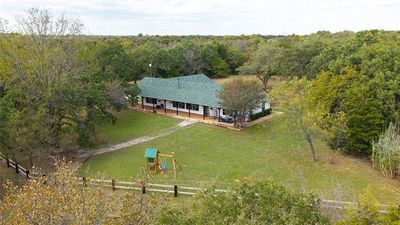
So choosing Norman really means choosing which Norman. There is the college town, downtown and around campus, where the old Santa Fe Depot still stands. There are the established mid-century neighborhoods that filled in as the university and the city grew together. There is newer construction going up on the west side. And there is the lake country to the east, which shops more like rural property than like anything suburban.
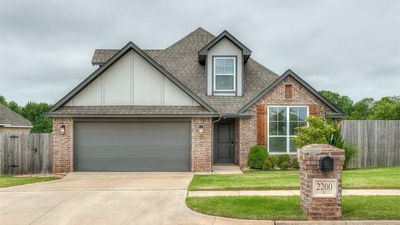
Those are four different products under one city government. A buyer comparing a new west-side house against an acreage east of the lake is making two separate decisions that happen to carry the same city name, and the first conversation I have with anybody looking here is which of the four they actually mean.
Norman High and Norman North
Norman Public Schools runs two high schools. Norman High and Norman North exist side by side for one plain reason, which is size. A city this large needed more than one building, so it has two, and that is really the whole story.
Which one a house feeds depends on where the house sits, and on 189 square miles that is not something to guess at from a neighborhood name. A few edges of the city also fall into neighboring districts. The assignment for a specific address comes from the district office, and I get that answer early, while it is still just information and nobody has fallen for the house yet.
From a surveyor's camp to a county seat
The name came first and the town came later. In the early 1870s a 23-year-old surveyor named Abner Norman camped here with his crew, and they burned "Norman's Camp" into a tree. When the 1889 Land Run brought settlers, the name was already sitting there waiting for them, and it stuck to everything that followed.
Norman became the seat of Cleveland County. In 1944 residents passed the bonds that funded Norman Regional Hospital. Interstate 35 came through in 1959. None of those changed the direction of the place. They added to it.
Norman counted 787 people in 1890 and 2,225 in 1900. It had 9,603 by 1930 and 27,006 by 1950. It reached 52,117 in 1970, 95,694 in 2000, and about 128,000 in 2020. Most towns in this metro have a decade that made them and a stretch where nothing happened. Norman has neither. There is no boom decade in that list and no flat one, only steady compounding for more than a century.
The town has a calendar to match. The Medieval Fair comes back every spring and has since 1976. The Norman Music Festival and Jazz in June fill the warmer months. The Sam Noble Oklahoma Museum of Natural History and the Fred Jones Jr. Museum of Art are on campus, and Bizzell Library is a National Historic Landmark.
A surveyor's crew left a name on a tree and moved on. A territorial vote put a university next to it. The city that grew up around the two of them never needed rescuing, and it has not stopped growing since.

No results found

Listings courtesy of Oklahoma City Metropolitan Association of REALTORS® as distributed by MLS GRID.
IDX information is provided exclusively for consumers' personal, noncommercial use, and may not be used for any purpose other than to identify prospective properties consumers may be interested in purchasing. The data is deemed reliable but is not guaranteed by MLS GRID. Use of MLS GRID data may be subject to an end-user license agreement prescribed by the applicable MLS, as amended from time to time.
Based on information submitted to the MLS GRID as of 3rd November, 2026 7:27 PM. All data is obtained from various sources and may not have been verified by broker or MLS GRID. Supplied Open House Information is subject to change without notice. All information should be independently reviewed and verified for accuracy. Properties may or may not be listed by the office/agent presenting the information. Updated: 3rd November, 2026 7:27 PM (UTC)