Two square miles, and finished
Nichols Hills is about two square miles, and it is done. It was platted once, built out, and kept at that size on purpose. There are roughly 1,780 housing units inside the city limits, and that is the whole inventory. Nobody is going to add a phase. A buyer here is never buying new supply. They are buying one of a fixed set of places, and waiting for somebody else to let one go. The size of the city is the product. Everything else about Nichols Hills follows from the decision to stop.
The census reads like no other city on this site. Nichols Hills counted 942 people in 1940, 2,606 in 1950 and 4,897 in 1960. Then it turned. The count went to 4,478, then 4,153, 4,020, 4,056 and 3,710, and the 2020 census came in a little under four thousand. Every other place I write about is bigger now than it has ever been. This one peaked in 1960 and has eased down ever since.
That is the design working. Households got smaller over sixty years and the city could not get bigger, because it was never supposed to. Downtown Oklahoma City is 13 minutes away, and the drive is one of the few things here that was not decided in 1928.
Ten shacks and a no from Oklahoma City
G.A. Nichols was an Oklahoma City developer, and in the late 1920s he toured the best planned suburbs in the country before he drew this one. He platted Nichols Hills in 1928 on rolling land north of the city.
To incorporate in 1929, the development needed residents, and it did not have any yet. So ten clapboard shacks went up, and friends of the developer slept in them long enough to qualify. Lot sales the first week reportedly topped a million dollars.
Then the Depression came, and the young city asked Oklahoma City to annex it. Oklahoma City said no. That rejection turned into the identity of the place. By 1959 Nichols Hills had adopted a home-rule charter, in part so that annexation could never happen without its own consent. A city that once asked to be absorbed made sure nobody could absorb it.
Today it sits as an enclave, bordered by Oklahoma City on the east, south and west, and by The Village on the north.
Streets drawn to slow you down
Nichols hired Hare and Hare, a planning firm out of Kansas City, and the street plan they laid out is the oldest amenity in the city. It still does its job every day.
They ran the lanes in curves that follow the contours of the hills. They gave the streets English town names. They pushed the commerce out to the edges. And they curved the roads deliberately, so that anyone cutting through has no choice but to slow down. You notice it within a block. The plan was built to make the outside world drive carefully past your front yard, and nearly a century later it still makes them.
Midwest City is the other planned city on this site, and the two make a useful pair. Midwest City was laid out in 1942 for a payroll, built for speed and density and getting workers housed fast. Nichols Hills was laid out fourteen years earlier for the opposite, for slowness and space and staying small. Same tool, opposite intentions.
Oklahoma City Golf and Country Club moved to the area as the development was taking shape, onto a course by Perry Maxwell, the architect behind Southern Hills and Prairie Dunes.
Schools
Nichols Hills does not run a school district of its own. Which schools serve a particular address is a question for the district office, and I ask it about the specific house. Many families here also weigh private options alongside the public ones.
The only way to build new here
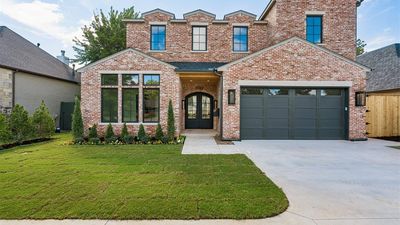
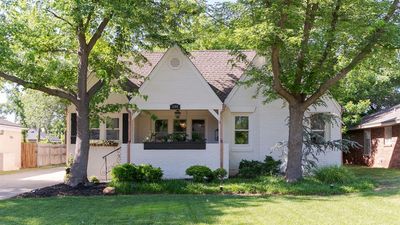
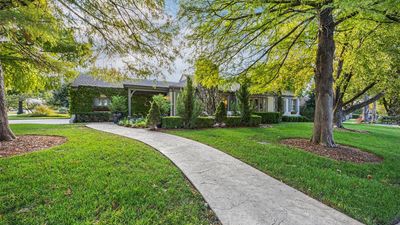
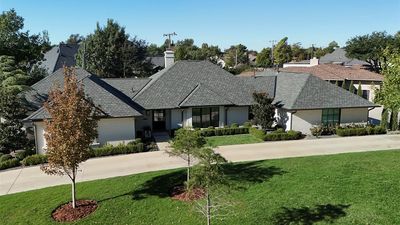
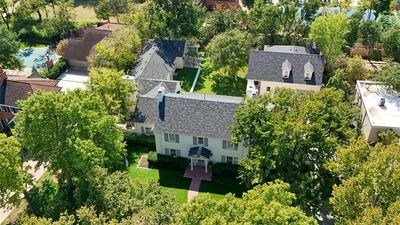
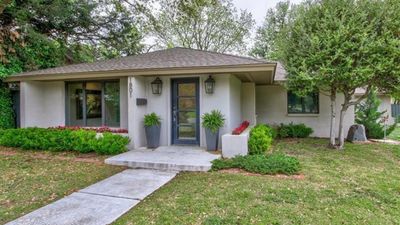
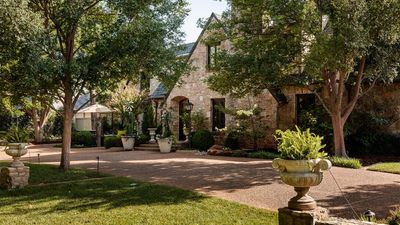
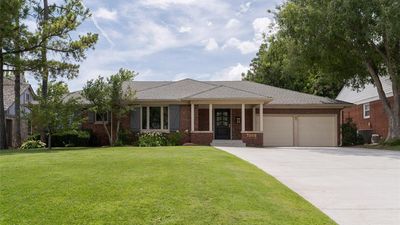
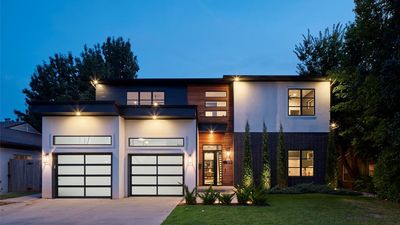
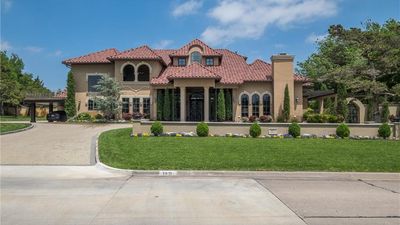
The core of the housing stock is 1930s through mid-century. What defines the market is what people do with it. In Nichols Hills, buying a house for its lot and building again has been established practice for decades. On a single street you can find a house from 1936 sitting next to one from 2018.
In a finished city that is the only way anything new gets built. There is no edge to grow toward and no farmland waiting to become the next subdivision. A new house in Nichols Hills means an old one came down first.
So when I look at a house here with somebody, the first question is which of two things they are buying. Some people want the house itself, the way it was built and the way it sits on its curve. Some people are buying the lot and the house is the thing they will pay to remove. Those two buyers can walk through the same front door and see completely different properties, and the asking price has to make sense to whichever one is actually going to show up.
It changes what an inspection is for, too. On a house somebody plans to keep, the report is a list of what to fix. On a house bought for the lot, the buyer mostly needs to understand the ground under it and what the city will allow to go up in place of what is there now.
About 90.2 percent of the occupied housing here is owner-occupied, the mirror image of a college town like Norman. People buy in and stay, which is part of why so few of those 1,780 places come open at once.
The city drew its lines in 1928 and never moved them. Every change since has happened inside them, one lot at a time.






No results found

Listings courtesy of Oklahoma City Metropolitan Association of REALTORS® as distributed by MLS GRID.
IDX information is provided exclusively for consumers' personal, noncommercial use, and may not be used for any purpose other than to identify prospective properties consumers may be interested in purchasing. The data is deemed reliable but is not guaranteed by MLS GRID. Use of MLS GRID data may be subject to an end-user license agreement prescribed by the applicable MLS, as amended from time to time.
Based on information submitted to the MLS GRID as of 2nd November, 2026 3:49 PM. All data is obtained from various sources and may not have been verified by broker or MLS GRID. Supplied Open House Information is subject to change without notice. All information should be independently reviewed and verified for accuracy. Properties may or may not be listed by the office/agent presenting the information. Updated: 2nd November, 2026 3:49 PM (UTC)