When was it built means something different in Moore
Every buyer everywhere asks when a house was built. Usually the question is about the roof, the wiring, and how much life the water heater has left. In Moore it carries a second meaning, and the second meaning is the best reason to read this page.
In 2014, Moore adopted enhanced residential building codes requiring new homes to stand up to winds of 135 miles per hour. Hurricane clips strap the rafters to the walls. Bolts tie the frame to the foundation. Roof joists sit closer together. Garage doors are built heavier, because a failed garage door is how wind gets inside a house and starts taking it apart. Moore was the first city in Oklahoma to require any of this, and it was among the first anywhere.
A house built in Moore after mid-2014 is built to a standard no other city in this metro requires.
And the market did not blink. Economists who studied Moore after the code found little to no effect on how many homes were built and sold once it took hold, added cost and all. People kept choosing Moore. The houses just got stronger.
Two dates everybody knows
Moore is nationally known for the tornadoes of May 3, 1999 and May 20, 2013, among the strongest ever recorded. I will not linger on them and I will not pretend they did not happen. Everyone in this metro knows those dates, and a Moore page that tiptoes around them is not being honest with you. What belongs on this page is what the town did next.
The building code was the city's answer, written into law the year after the second storm. The schools answered in their own way. The 2013 tornado destroyed two elementary schools, and the district rebuilt Plaza Towers and Briarwood with designated safe rooms in time to reopen for the 2014-15 school year. Shelter construction has been part of how Moore builds schools since. That does not mean every school has one, and I will not claim it from a web page. If a shelter at school matters to your family, ask the district about the specific school. The real answer lives there and nowhere else.
Shelters run through the housing the same way. Does this house have a storm shelter or a safe room is a normal question in Moore, asked the way you would ask about the fence or the roof. Plenty of houses have one. It is a real feature with real value here, and asking costs nothing.
The between city
Moore sits directly between Oklahoma City and Norman on Interstate 35, about 22 square miles of Cleveland County carrying one of the largest populations in the state. Every other city I write about was made by something that arrived and stayed. Moore's geography is simpler than that. It is the between city, and being between is the product.
The census says it plainly. Moore counted 942 people in 1950 and 1,783 in 1960. By 1970 it held 18,761. The town multiplied by more than ten in one decade, the sharpest jump of any city on this site, and the railroad that had been there since the 1880s had nothing to do with it. Interstate 35 did it. Once the highway opened, sitting exactly between the metro's two biggest job centers stopped being empty distance and became the whole proposition.
It still works that way. Oklahoma City holds the bigger payroll to the north. The University of Oklahoma anchors Norman to the south. Tinker is a short drive to the northeast. Downtown Oklahoma City runs about 13 minutes up the interstate, and a Moore household can point one working adult north and another south without either drive being the long one.
Moore raised Toby Keith.
One high school, then two, then three
Moore Public Schools is one of the largest districts in Oklahoma, and it reaches well past the city limits, into southern Oklahoma City on one side and northern Norman on the other. Which school serves which address is a question for the district office, not for this page.
The high schools carry the growth story better than the census table does. Moore High School opened in 1920 and served the whole town by itself for sixty-eight years. Westmoore arrived in 1988, after the boom decades filled in the west side. Southmoore followed in 2008 as the south end kept building. Moore never split a high school. It added one each time the city outgrew the last one, and the three names lay the town's eras end to end.
The district's oldest landmark tells the same story from the far end. The 1928 high school building still stands and has been on the National Register of Historic Places since 1984.
A 2015 house on a 1975 street
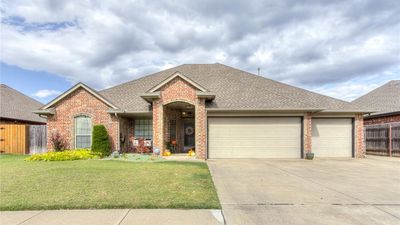
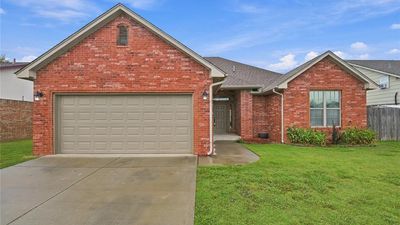
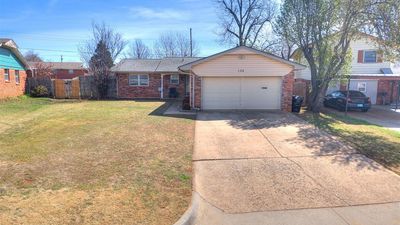
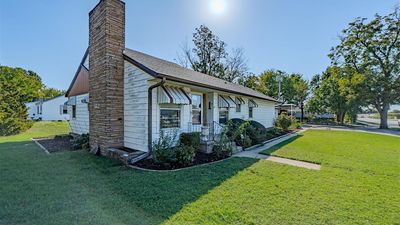
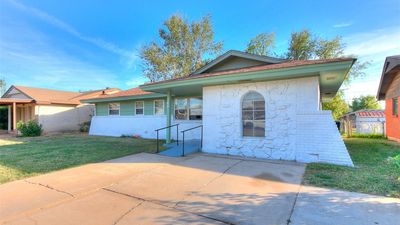
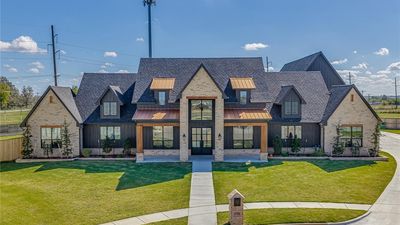
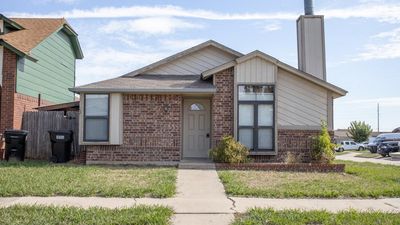
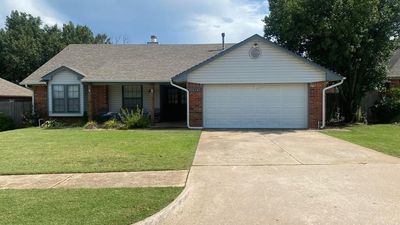
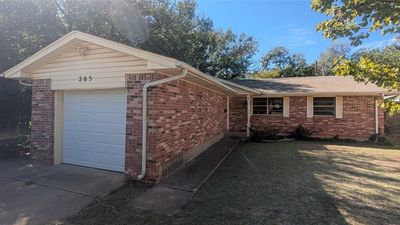
The boom put most of Moore's houses in the ground in the 1970s and 1980s, and that core is what you see first. Brick ranches, streets that were finished long ago, trees with fifty years of head start. But growth here never stopped the way it did in some of the older suburbs, so real 2000s and 2010s construction stands along the newer edges too.
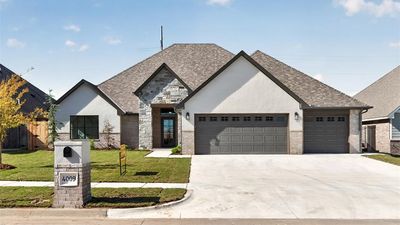
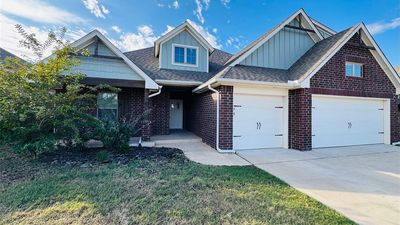
And scattered through the older neighborhoods there is a sight that reads strange until you know the reason. Newer houses standing on older streets. Parts of Moore have been rebuilt over the years, and everything permitted after mid-2014 went up under the 135 mph code no matter what decade built the street around it. A 2015 house on a 1975 street is a normal Moore sight with a specific explanation behind it.
So there are two questions I want answered on any Moore house, and I ask them early. Does it have a storm shelter or a safe room, and when was it built. Both are normal questions here. Both cost nothing. And the second one means more in Moore than anywhere else I work.
Named for a man in a boxcar
The name, for the record, promised none of this. The railroad made Moore a watering stop in the 1880s, and the town is named for Al Moore, a railroad employee who lived there in a boxcar. Sixty years later it was still a town of fewer than a thousand people. Nothing about the founding predicted what the interstate would do, and nothing about the boom predicted what the town would decide in 2014.
Most places out here were made by what showed up. Moore was made by what it came through and by what it decided afterward, and you can read that decision in the framing of every house permitted here since mid-2014. A little over sixty thousand people live inside that answer now, going by the 2020 census.
Moore Market Update, September 2026
Fifty two single family homes closed in Moore in September 2026, down from 78 in September 2025. The median sale price was $270,700, up 23.9 percent from $218,500 a year earlier.
A median that jumps nearly a quarter in a year deserves a second look, and the price per square foot is where to look. The median price per square foot in September was $173, up 11.6 percent from $155. That is a real gain, but it is about half the size of the move in the median sale price. The gap between the two is the pattern a change in which houses sold produces, and Moore is a city where that matters more than most, because a house built before the 2014 building code and one built after it can sit on the same street and be built to very different standards. With closings down by a third, each sale also counts for more in the middle of the list.
Supply is a little tighter. There were 62 new listings in September against 86 a year earlier, down 27.9 percent, and 162 homes were for sale at the end of the month, down 8.5 percent from 177. Months supply held at 2.3, exactly where it was a year ago, because the twelve month pace of closings is running about 8 percent below last year, which offsets the smaller shelf of houses.
The median home went under contract in 16 days, down from 20 in September 2025, and sellers received a median 99.2 percent of their last list price, down from 100.0 percent. A year ago the typical Moore seller got full asking price. In September the typical seller gave back under a point, and the house still sold in about two weeks.
The plain read of September in Moore is fewer houses changing hands at higher prices, with about the same number of months of supply as a year ago. Because the median blends houses built to different standards, the price per square foot and the supply figures are the steadier read of where the market stands.
Source: MLSOK MarketStats, Moore, single family homes, September 2026. Published October 28, 2026.


No results found

Listings courtesy of Oklahoma City Metropolitan Association of REALTORS® as distributed by MLS GRID.
IDX information is provided exclusively for consumers' personal, noncommercial use, and may not be used for any purpose other than to identify prospective properties consumers may be interested in purchasing. The data is deemed reliable but is not guaranteed by MLS GRID. Use of MLS GRID data may be subject to an end-user license agreement prescribed by the applicable MLS, as amended from time to time.
Based on information submitted to the MLS GRID as of 2nd November, 2026 3:49 PM. All data is obtained from various sources and may not have been verified by broker or MLS GRID. Supplied Open House Information is subject to change without notice. All information should be independently reviewed and verified for accuracy. Properties may or may not be listed by the office/agent presenting the information. Updated: 2nd November, 2026 3:49 PM (UTC)