The town was the second thing built here
Most towns in this metro started with people and then had something happen to them. A railroad arrived, or left. A highway came through and took the traffic somewhere else. Midwest City went the other direction. It was drawn on paper first, for a specific job, and then filled in.
In late 1940 a group of Oklahoma City civic leaders formed a foundation to land a federal air depot. They bought 960 acres and handed the land to the government for nothing. The site was chosen on April 8, 1941. The Oklahoma City Air Depot was activated on March 1, 1942, and W. P. "Bill" Atkinson started putting up houses that April, at East Trumbull and East Boeing.
The city itself did not incorporate until March 11, 1943.
So the town is a year younger than the base it was built to serve. That order of events explains how the place is laid out and why the housing stock looks the way it does eighty years later. The work came first and the town was assembled around it deliberately.
The city kept a name the base gave up
Atkinson named his new town after the installation it was built for, which at the time was going to be the Midwest Air Depot.
The installation carried that name for about seven months. On October 14, 1942 it became Tinker Field, after Major General Clarence L. Tinker, an Osage officer from Pawhuska who had been killed in the Pacific that June. In January 1948 it became Tinker Air Force Base.
The base changed its name. The town never did. Midwest City is still named after a depot that was only ever briefly called that, which reads as a small accident until you notice how little else here happened by accident.
You can see the 1942 plan from the driver's seat
In 1942 Atkinson hired Seward Mott, who ran the Federal Housing Administration's Land Planning Division, to lay the city out.
Mott put curving streets, circling roads and cul-de-sacs inside the neighborhoods and kept them deliberately separate from the wide straight roads that carry the through traffic. That was not how towns got built in 1942. It drew national attention at the time, and it is the reason Midwest City does not drive like a grid suburb. You feel it before you can name it. You turn off a main road and the traffic stops following you.
The oldest part, the piece built to Mott's original plan, is still called the Original Mile and sits just north of the base.
The schools, and the part nobody explains to a family on orders
Mid-Del Schools is larger than the city, and four districts touch pieces of Midwest City, so I will not tell you from a web page which one serves a given address. That is a phone call to a district office and it takes about ten minutes to get a real answer.
What I can tell you is the thing almost nobody explains, and it only belongs on this page because no other city I write about has a base attached to it.
When a family arrives on orders in the middle of a school year, there is a real agreement governing what happens next. It is the Interstate Compact on Educational Opportunity for Military Children, and all fifty states and the District of Columbia have adopted it. It covers military-connected students from pre-K through twelfth grade during a PCS move.
It lets a school enroll a child provisionally on the previous school's records, with a thirty-day grace period for new immunizations. It keeps a student at the same grade level even when the new state's age cutoffs would have placed them somewhere else. Prior coursework and advanced placement carry over instead of being repeated. A kid can join an extracurricular after the application deadline has already passed. A child living with a relative under power of attorney during a deployment can still attend. There are course waivers, acceptance of a previous school's exit exams, and coordination between districts so a senior who transfers mid-year still graduates on time. A student with an existing IEP is entitled to comparable services and to a reevaluation.
That is a framework rather than a guarantee, and the answer for one particular child comes from the district. What this page can do is tell a family the machinery exists, which is more than a listing sheet will ever do.
Mid-Del runs three high schools. A student who transfers in on orders lands at Carl Albert or at Midwest City High School or at Del City High School, and the compact’s provisions on coursework and on graduating on time follow that student into whichever one it turns out to be.
Mid-Del calls itself "1 Proud Military Community" and keeps a section of its own site for military families. It runs more than twenty schools and programs. One of them is Tinker Elementary, a public district school serving the base area, which is an unusual arrangement anywhere and says something honest about how fused this city and this installation are.
Almost every house here comes from the same twenty years
The census tells this part better than I can.
In 1950 Midwest City had 10,166 people. By 1960 it had 36,058. It more than tripled in ten years. The sixties added twelve thousand more, up to 48,114 by 1970.
Then it stopped. From 1970 to 2010, across four full decades, the city moved about six thousand people. The 2020 count came in a little under sixty thousand.
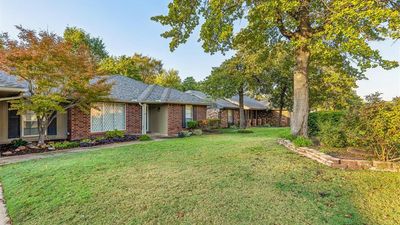
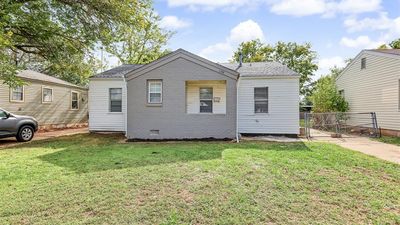
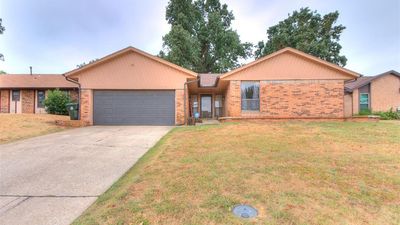
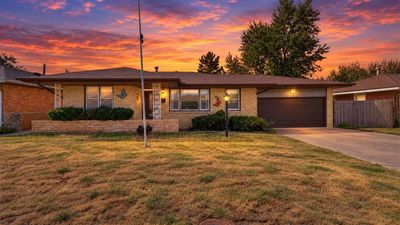
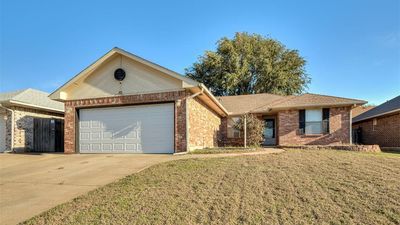
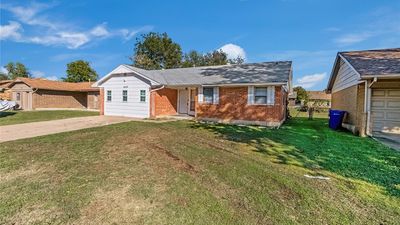
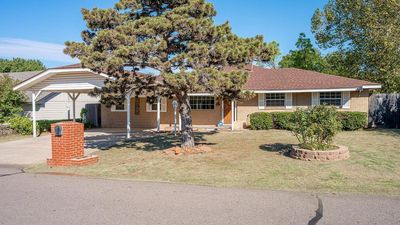
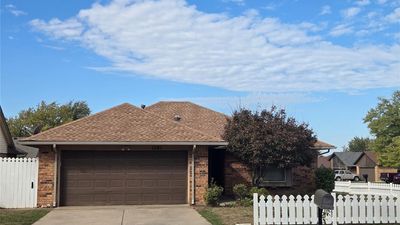
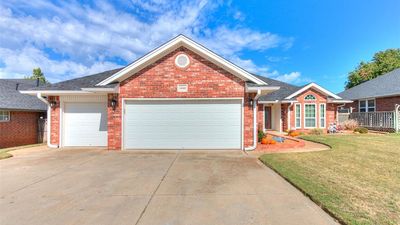
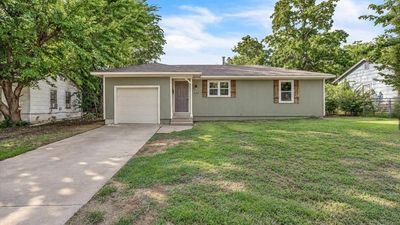
So the housing stock is overwhelmingly mid-century and it is concentrated into roughly two decades, built fast and built to a plan. On the ground that means mature trees, finished streets, and neighborhoods that settled into what they were going to be a long time ago.
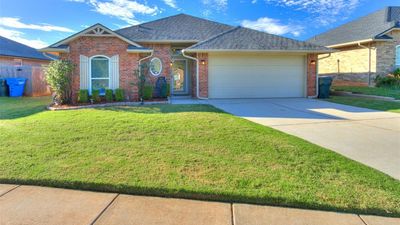
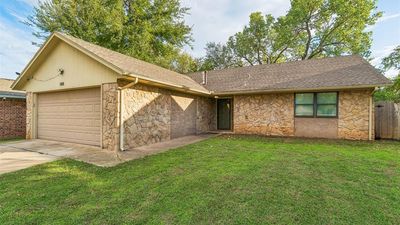
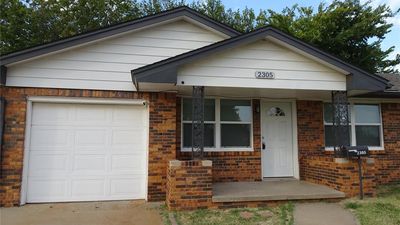
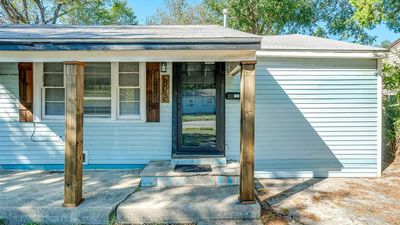
A buyer here is not choosing between eras the way they would in a town that has been building continuously for thirty years. Most of the houses are a similar age, and the real variables are condition, what has been updated, and which part of the original plan they sit in.
What this means when you are actually looking
Midwest City covers about 24 square miles and holds more than twice the population of Yukon, which covers slightly more ground. That makes it the densest suburb I write about, and the density follows directly from having been planned rather than sprawled.
The other thing worth understanding is which way people drive. Oklahoma City sits next door and the trip downtown is 14 minutes. A lot of traffic runs the other way every morning, into Midwest City, because the work is here. Tinker has been an aircraft maintenance and repair depot since the day it opened and it still is, B-17s and B-24s and B-29s during the war and every generation of airframe since. At the peak of wartime work in late 1943, 13,500 people worked at the air depot and another 23,000 at the Douglas plant next door. Those are 1943 figures and I offer them as history rather than as anything current.
Rose State College opened in 1970 as Oscar Rose Junior College, named for the man who had been superintendent of the Midwest City and Del City schools. Voters approved the college district two years before that. A town that names its college after a school superintendent is telling you plainly what it considers its central institution, and the college has built programs around Tinker's civilian and military workforce ever since.
The rest of it is a working city. The Reed Center handles conventions. Town Center Plaza faces Interstate 40 where the older Atkinson Plaza used to sit. The founder's house is a heritage center you can walk through. Star-Spangled Salute comes every summer, Global Oklahoma fills Rose State on the first Saturday in October, and there is a Juneteenth family festival.
If you are arriving for Tinker, the useful question is which part of the original plan you want to be inside, because that plan is still doing the work it was drawn to do in 1942. Most houses here are the same vintage, so what separates two of them is condition and what somebody has already fixed. That is a good problem to have. It means you are choosing on the things you can see.
Midwest City Market Update, September 2026
Thirty six single family homes closed in Midwest City in September 2026, up from 24 in September 2025. The median sale price was $161,250, down 14.0 percent from $187,500 a year earlier.
Those two figures have to be read together, because a third one changes what they mean. The median price per square foot in September was $136, which is exactly where it was in September 2025. A citywide median that falls 14 percent while the price of a square foot does not move at all is not telling you that Midwest City homes lost value. It is telling you that a different set of houses sold. Thirty six closings is a thin month, the median is one sale sitting in the middle of that list, and it moves when the size and the street behind those sales change. The per square foot figure held flat through the same month.
Supply is up, modestly. There were 56 new listings in September against 54 a year earlier, and 110 homes were for sale at the end of the month, up 7.8 percent from 102. Months supply came in at 3.1, up from 2.6, which is a larger move than inventory alone would produce: the twelve month pace of closings in Midwest City is running about 5 percent below where it was a year ago, so the same shelf of houses now represents more months of selling.
The clearest change in the table is time. The median home went under contract in 25 days, up from 15 in September 2025, and sellers received a median 98.9 percent of their last list price, down from 99.9 percent. A year ago the typical Midwest City seller had an accepted offer inside of two weeks and got essentially the full asking price. In September it took closer to four weeks and gave back about a point.
For a city that was laid out and built in one era, that combination is worth keeping straight. The price of a square foot in Midwest City did not move this year. What moved is how long a house waits and which houses happened to sell, and neither of those is visible in the median by itself.
Source: MLSOK MarketStats, Midwest City, single family homes, September 2026. Published October 23, 2026.


No results found

Listings courtesy of Oklahoma City Metropolitan Association of REALTORS® as distributed by MLS GRID.
IDX information is provided exclusively for consumers' personal, noncommercial use, and may not be used for any purpose other than to identify prospective properties consumers may be interested in purchasing. The data is deemed reliable but is not guaranteed by MLS GRID. Use of MLS GRID data may be subject to an end-user license agreement prescribed by the applicable MLS, as amended from time to time.
Based on information submitted to the MLS GRID as of 2nd November, 2026 3:49 PM. All data is obtained from various sources and may not have been verified by broker or MLS GRID. Supplied Open House Information is subject to change without notice. All information should be independently reviewed and verified for accuracy. Properties may or may not be listed by the office/agent presenting the information. Updated: 2nd November, 2026 3:49 PM (UTC)